
Home / Park strips
Park strip conversions
Park strip landscaping in Utah County
Turn the strip of grass between the sidewalk and the street into rock, mulch and low-water plants on drip. We plan it to the rebate program's rules, do the dirt work and the sprinkler changes, and help with the application.
- 5.0 · 20 Google reviews
- Free estimates
- Same-day response
- Hablamos español
Why start here
The park strip is the easiest lawn to give up
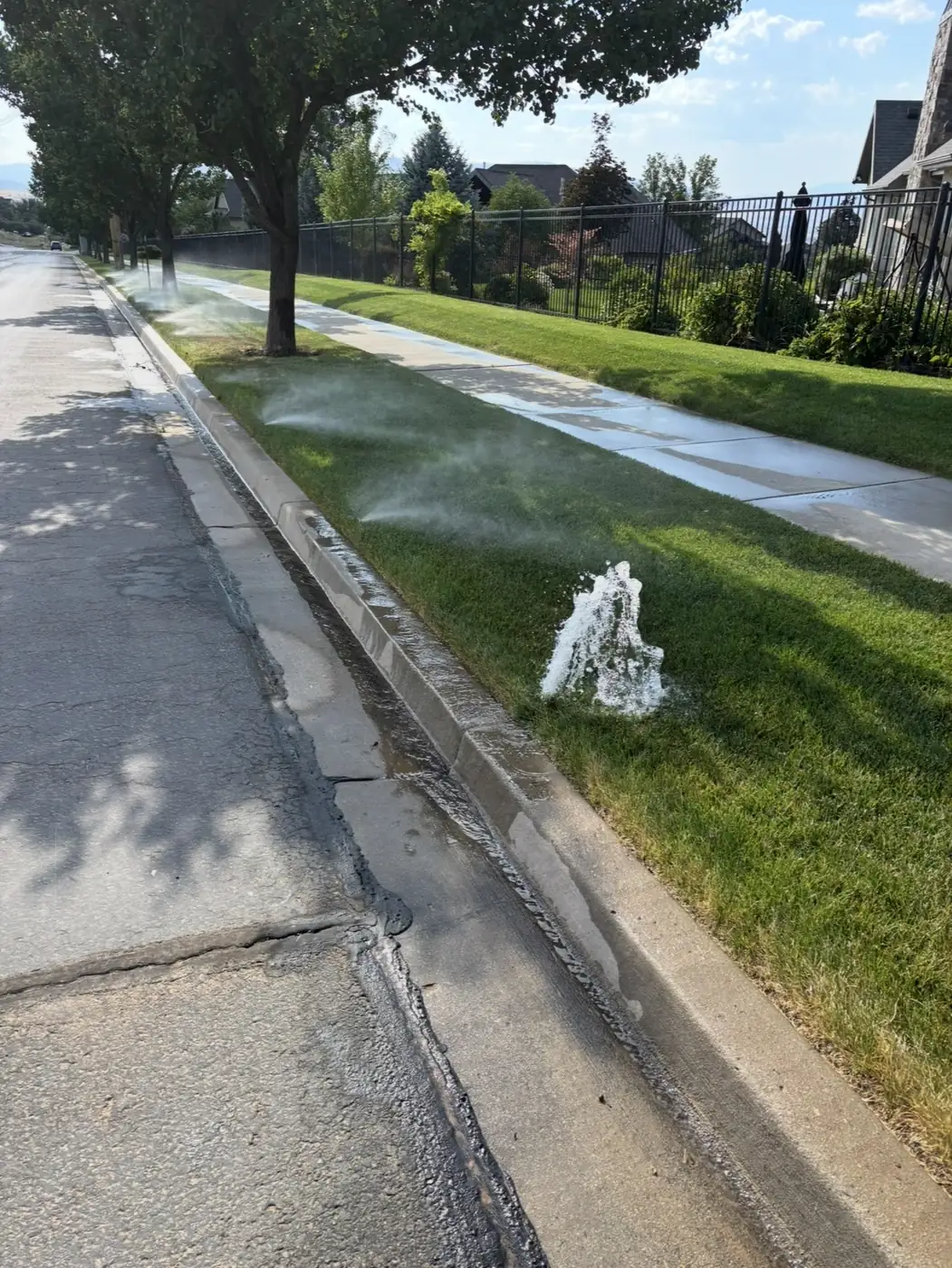
Spray can't water it well
Sprinklers aren't designed for areas narrower than about 8 feet. In a park strip, a lot of the water lands on the sidewalk and runs down the gutter.
Nobody uses it
It still needs mowing, edging and water every week, but nobody plays or sits on it.
Everyone sees it
It's the first thing people see from the street. A clean, planted strip makes the whole yard look finished.
Rebate rules
What the Utah County rebate requires for park strips
Park strips go through Central Utah Water's Landscape Incentive Program on Utah Water Savers. These are the rules that matter most:
- Approved before any grass comes out, and the lawn has to be alive at the first visit
- At least 200 sq ft in total. Areas can be combined, so a park strip can be paired with part of the front lawn
- Plants cover at least half the strip at maturity, and none grow taller than 24 inches
- 3 to 4 inches of rock or mulch. Rubber mulch isn't allowed
- Drip on its own zone with a filter and pressure reducer. No micro-sprays, bubblers or soaker hoses
- No rebate trees in park strips narrower than 10 feet
- No leftover strip of lawn narrower than 8 feet
The rate depends on your town. Springville, Mapleton, Provo and Orem pay $1.50 per sq ft of lawn replaced. Spanish Fork, Salem and Payson pay $3.00. Estimate your rebate
From the Central Utah Water program pages on Utah Water Savers, October 2026. Rules can change, and your city may have its own park strip rules.
How we do it
How we convert a park strip
Measure & plan
We measure the strip, take the photos and draw the 2D plan the rebate application asks for.
Approval visit
The program visits and approves the project before any grass comes out.
Turf out
Sod removed and the strip dug down a few inches below the sidewalk, so rock and mulch stay in the strip.
Sprinkler changes
Spray heads capped and a new drip zone added, with the filter and pressure reducer the program requires.
Plants & mulch
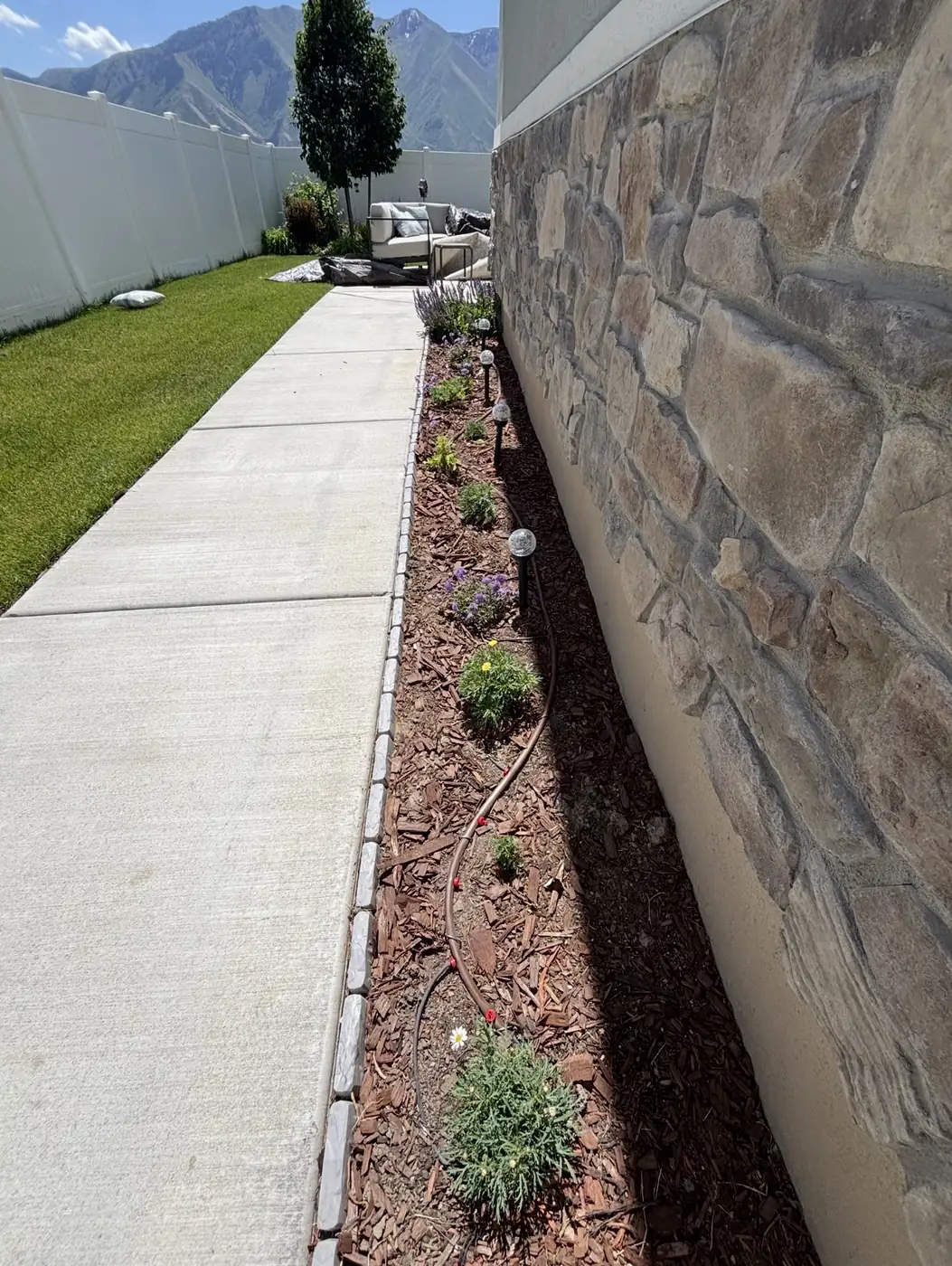
Low plants that stay under 24 inches, 3 to 4 inches of rock or mulch, and room by the curb to step out of a parked car.
Final inspection
We run the drip with you so it's working and leak-free when the program comes back to sign off.
Park strip ideas
Low plants that work in a Utah park strip
Park strips get full sun, reflected heat off the concrete and road salt in winter, and the rebate caps plants at 24 inches. These stay low and handle all of it.
Creeping thyme
A flat, tough ground cover that fills in around stepping stones and smells good when you walk on it.
Sedum & hardy ice plant
Low succulents that spread between rocks and bloom in summer.
Blue fescue
Small blue mounds of grass that look good year-round.
Pineleaf penstemon
A low Utah-friendly penstemon with orange-red flowers that hummingbirds like.
Compact catmint
Short varieties like Little Trudy give purple color most of the summer.
Kinnikinnick
An evergreen ground cover for strips with some shade from street trees.
We check the mature height of every plant against the 24-inch rule before it goes in.
Questions
Common questions
How much does a park strip conversion cost?
Park strips are small, so setup and hauling make up a bigger share of the job, and the price per square foot usually lands toward the high end of the $5 to $15 per sq ft range for xeriscaping. The rebate takes a real bite out of it. Estimates are free. See xeriscaping costs in Utah County.
Does my park strip qualify for the rebate on its own?
Only if it's at least 200 sq ft. Many aren't: a 6 by 30 foot strip is 180 sq ft. Areas can be combined to reach the minimum, so most people pair the park strip with part of the front lawn or a side yard.
Can I just put rock in my park strip?
Not if you want the rebate. Plants have to cover at least half the strip at maturity. A mix of rock or mulch and low plants also looks better and stays cooler than solid rock.
Can I plant a tree in my park strip?
The rebate doesn't pay for trees in park strips narrower than 10 feet. Cities also have their own rules for street trees, so check with yours before planting one.
Is this the same as Flip Your Strip?
Flip Your Strip was the name of Central Utah Water's original park strip program, and Salt Lake County programs still use it. In Utah County today, park strips go through the Landscape Incentive Program on Utah Water Savers.
When should I do it?
Plan it in winter. In towns with secondary water, the program's site visits pause from October 15 to April 15. With the plan and photos ready, you can apply as soon as visits start again in spring.
Service area
Based in Springville, working across Utah County
Sprinkler repairs mostly stay close to home. Bigger landscape and excavation projects can go anywhere along the Wasatch Front. Not sure if you're in range? Send a text and ask.
- SpringvilleHome base
- Mapleton
- Spanish Fork
- Salem
- Payson
- Provo
- Orem
- Wasatch FrontLarger projects